2026-10-18 · Tyler Johnson
Preparing Your Air Conditioner for Spring in the Great Basin: A Pre-Season Checklist
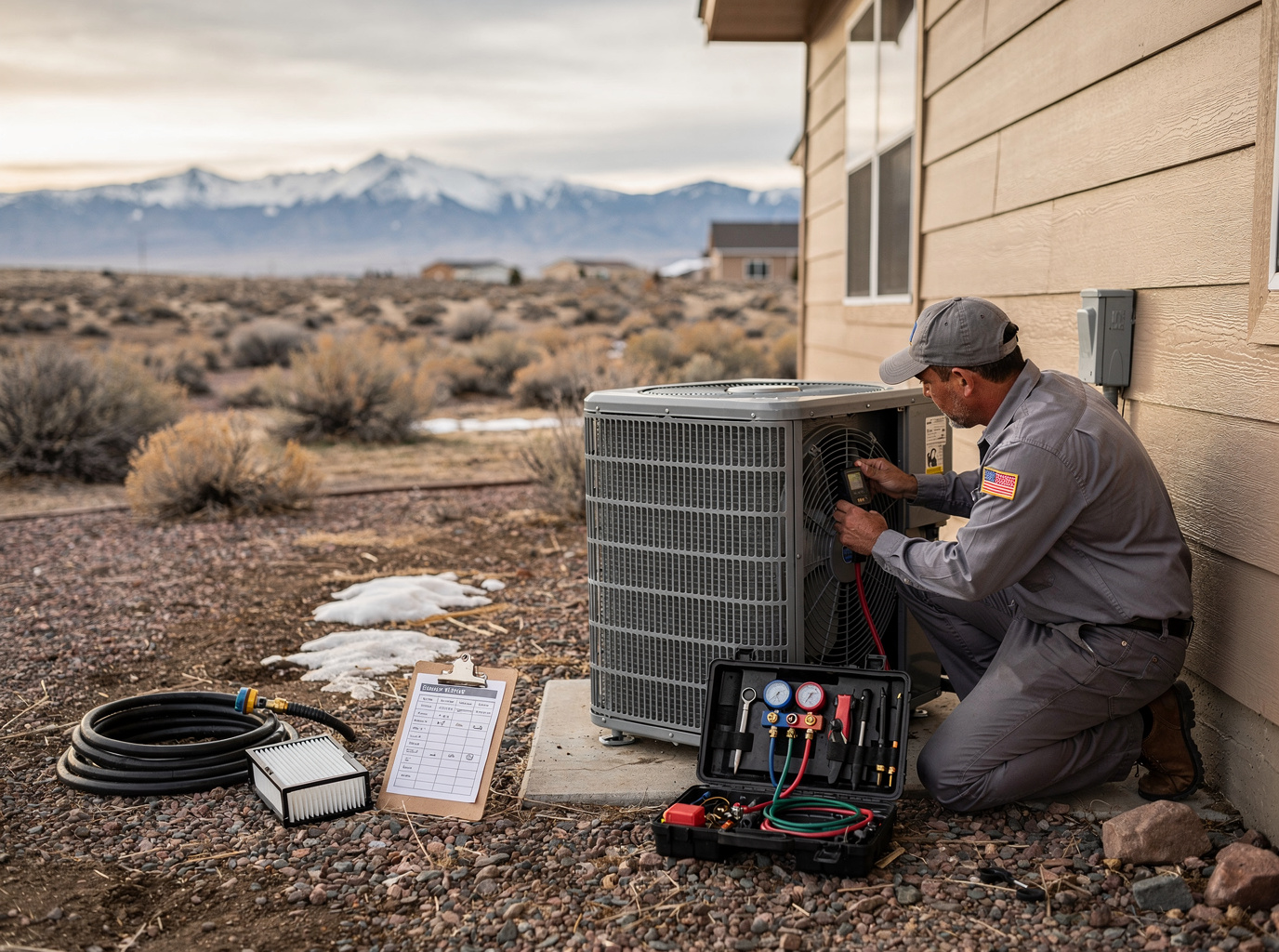
Preparing an air conditioner for spring in the Great Basin usually takes 1 to 2 hours and costs under $30 if you only replace a filter and clear debris. The steps below are what we check on most systems around Elko before the first 90-degree afternoon, and they catch problems while they are still cheap to fix.
Why Spring Is the Right Time to Check Your System
High desert weather in Elko County is hard on cooling equipment. Winters drop well below freezing, and summers bring hot, dry afternoons that can push a system to run for hours without a break. An air conditioner that sat idle through a long winter has had time for dust to settle, seals to dry, and wiring connections to loosen with temperature swings.
Spring is the window when a problem is still a small job. A tired capacitor or a clogged drain found in April is usually a same-day fix. The same fault discovered during a July heat wave often means waiting in line while everyone else in Downtown Elko and South Elko needs service at once. Working through this list before the heat arrives gives you a baseline and a chance to schedule any repairs on your own timeline.
Replace or Clean the Air Filter
The filter is the cheapest and most important item on this list. A clogged filter restricts airflow across the evaporator coil, which can cause the coil to freeze and the system to short-cycle. Check it monthly du
Clear and Inspect the Outdoor Condenser
The outdoor condenser unit needs unobstructed airflow to reject heat. Over winter, leaves, tumbleweeds, snow residue and blown sand can collect against the fins and inside the cabinet. Turn the system off at the thermostat and at the disconnect box before touching anything. Then gently clear debris from around the unit, keeping at least 2 feet of open space on all sides.
Use a garden hose on a low setting to rinse the coil fins from the inside out if they are dusty, but do not use a pressure washer, which bends the fins and reduces efficiency. Look for bent fins, oil spots on the pavement below, or a fan blade that wobbles. Those signs point to a problem worth a professional look. Many older homes in the neighborhoods around the Elko County Fairgrounds have condensers set close to fences or walls, so confirm the unit still has room to breathe after the snow melts.
Check the Thermostat and Run a Test Cycle
Set the thermostat to cool and drop the setpoint several degrees below room temperature. Within a few minutes the outdoor fan should spin up and cool air should come from the vents. Listen for grinding, squealing or rapid clicking. Confirm that the indoor blower runs with the system and that air at the supply registers feels noticeably colder than the return air.
If the thermostat runs on batteries, replace them now. A the
Inspect the Condensate Drain and Drain Line
Cooling systems pull moisture out of indoor air, and that water must leave the house through the condensate drain. In Elko's dry spring air the volume is lower than in humid climates, but algae and sludge still build up in drain lines over a long idle season. A clogged drain can overflow the drain pan and damage ceilings or flooring, sometimes without any warning.
Locate the PVC drain line near the indoor air handler or furnace. Pour roughly 1 cup of distilled water or a mix of vinegar and water into the access port to flush it, then watch for water exiting the outdoor end. Check the drain pan for standing water or rust. Many systems include a float switch that shuts the unit off when the pan fills; if it trips during your test run, the drain needs attention.
Look at the Refrigerant Lines and Electrical Connections
The copper refrigerant lines between the indoor and outdoor units should be intact, with insulation in good shape. Cracked or missing insulation on the suction line reduces efficiency and can cause condensation problems on hot days. Do not attempt to tighten or adjust refrigerant fittings yourself; those repairs require specialized tools and training.
At the disconnect box, look for scorched wiring, a burnt smell, or corrosion on contacts. Verify that the breaker has not tripped and that the disconnect is ful
When to Call a Professional
DIY spring prep covers the basics, but some signs mean the system needs a technician. Call for service if the unit runs but produces weak or warm air, if the outdoor fan does not spin, if you hear grinding or banging, or if you see ice on the refrigerant lines or indoor coil. Those symptoms usually point to refrigerant, electrical or mechanical faults that a homeowner should not chase alone.
A professional tune-up typically includes a full electrical check, coil cleaning, refrigerant pressure readings, and airflow measurement. Pricing varies with system size and what is found, so ask for a written quote before work begins. If you are weighing repair against replacement, our guide to AC repair costs in Elko, Nevada walks through common repair ranges. For scheduled inspections, our AC maintenance service covers the checks described above in one visit.
Great Basin Heating and Air is based at 1345 Water St Unit 6 in Elko, NV 89801, and we are available 24/7 when a system fails during an unexpected cold snap or heat wave. We serve homes across Elko, including Downtown Elko, South Elko, and nearby communities such as Spring Creek, Carlin and Winnemucca.
A Practical Close for the Season
A spring checklist is not a one-time event. R