2026-10-18 · Tyler Johnson
Why Your AC Struggles on Hot Elko Afternoons: Causes and What You Can Check Yourself
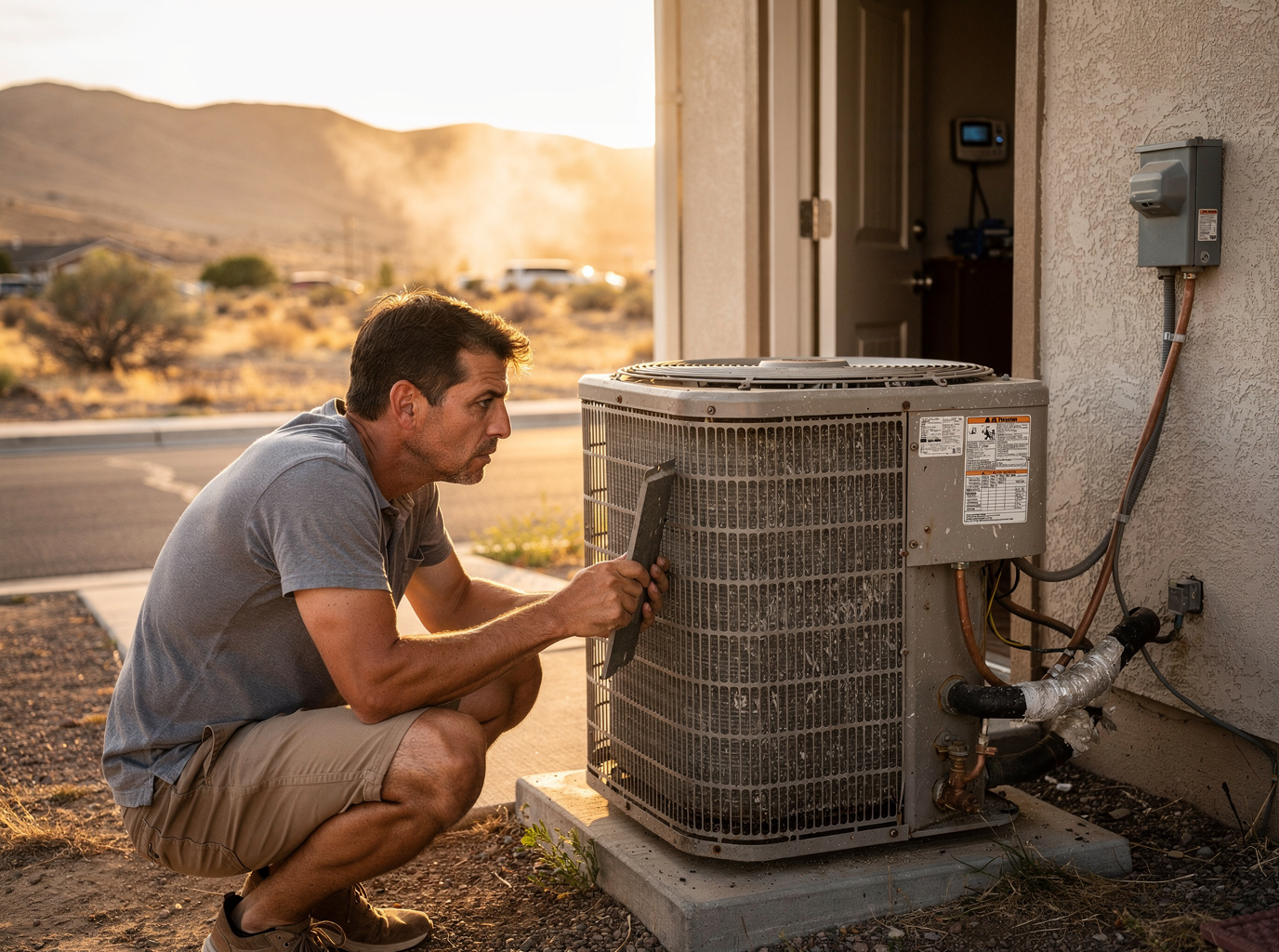
When an air conditioner runs fine at 9 a.m. but can't hold the thermostat setting by 3 p.m. on a July day in Elko, the most likely explanation is that the system is working at its limit and something is reducing its margin. Common culprits are a dirty outdoor coil, restricted airflow through the return and supply, a thermostat set too aggressively, or a component that is weakening under sustained heat. Most of these can be checked in under an hour, and several cost nothing to fix.
Why Afternoons Are the Hardest Window
High desert summers in Elko County bring strong sun and warm afternoon air, and that combination pushes heat into a house through the roof, west-facing walls, and windows for hours. Your system is designed to remove that heat, but its capacity is rated under specific conditions, and it spends most of the afternoon at or near full output. A unit that is healthy but a few years into its life, or one with minor airflow problems, may cool the house steadily while the heat load is building and then fall behind as the house soaks up heat.
The pattern is important. If the system runs constantly from early afternoon into evening and the indoor temperature still creeps upward, the equipment is struggling. If it cycles off and on quickly, the problem may be a different one, such as a short cycle or a sensor issue.
Dirty Coils and Restricted Airflow
The most common cause of afternoon struggle is restricted airflow, and it is also the easiest to check. Your outdoor condenser pulls in hot air and releases it, and that only works if the coil can exchange heat freely. Cottonwood fluff, dust blowing off dry lots, grass clippings, and sun-baked debris can coat the fins and cut performance noticeably. Homes near open ground on the edges of town, including parts of South Elko, tend to see more of this than neighborhoods with more shade and paving.
Indoors, check the air filter. A filter clogged with dust forces the blower to work harder and reduces the air moving across the evaporator coil. Replace disposable filters every one to three months during the cooling season, and inspect them more often if the house gets dusty. Also make sure supply registers and returns are open and not blocked by furniture or rugs.
Ductwork and Older Housing Stock
Many homes in Downtown Elko were built decades ago, and a meaningful share of them have ductwork that was installed in unconditioned attics or crawlspaces without much insulation. In summer, those ducts can gain heat before the cool air reaches the rooms, so the air leaving the vents is noticeably warmer than the air at the unit. Leaky joints and crushed flex duct add to the loss. The result is a system that is technically running but delivering less cooling than its size suggests.
You can check for this yourself in a basic way. Place a hand at a few supply registers during a run and compare the airflow strength from room to room. A rooms-far-from-the-unit problem usually points to duct leakage or undersized runs rather than a failing compressor.
Thermostat Settings and Sizing Mismatches
It is tempting to set the thermostat to 68 degrees at noon to 'get ahead' of the heat, but that usually backfires. A system pushed to run continuously at full output will struggle, and it may trigger a long recovery period in the hottest part of the day. For most homes, setting the thermostat a few degrees higher during peak afternoon hours and using a steady setpoint is more efficient and easier on the equipment.
Also consider whether the unit was sized correctly for the house. Additions, converted garages, and new windows change the heat load, and a system that once kept up may no longer do so. A proper load calculation answers that question far better than guessing.
What You Can Check Yourself
Before calling for service, you can safely work through a short checklist that covers the most frequent causes:
- Air filter: Replace it if it is visibly gray or clogged, which is often a $10–$30 fix for standard filters.
- Outdoor coil: Turn off power at the disconnect, then gently rinse the fins from the inside out with a garden hose. Do not use a pressure washer, and do not bend the fins.
- Clear space around the condenser: Keep at least 2 feet of clearance on all sides so air can move freely.
- Registers and returns: Open any closed vents and remove obstructions.
- Thermostat: Confirm it is set to cool, the fan is set to auto, and the setpoint is realistic for afternoon heat.
- Condensate drain: Check that the drain line is not clogged, since a backed-up drain can trip safety switches.
If the unit still runs but never reaches setpoint after these steps, you are likely dealing with a refrigerant, electrical, or compressor issue that needs a technician.
When to Call a Professional
Call for service if the outdoor unit does not run, runs without cooling, freezes up with ice on the lines, makes grinding or screeching noises, or trips the breaker repeatedly. Those symptoms point to components that should not be tested by a homeowner. Refrigerant work requires proper equipment and training, and electrical faults can be dangerous. A diagnostic visit should identify the cause, explain the options, and give you a written estimate before any work begins.
If a repair is needed, it helps to know what it may cost. Our guide on how much AC repair costs in Elko walks through common price ranges. If you need help now, you can review our AC repair services, and we are based at 1345 Water St Unit 6 in Elko, open 24/7.
Keeping the System Ready for Next Summer
Most afternoon struggles are preventable with routine attention. Cleaning the coil, changing filters on schedule, and having the system inspected before the heat arrives can keep it running with margin. Our spring pre-season checklist covers those tasks in more detail. Once winter temperatures drop, the same unit also has to handle cold nights, so addressing problems early helps it perform in both seasons. If your home is in Spring Creek, Carlin, or Winnemucca and you notice the same pattern, the same checks apply across the region.